Effectiveness of Mandala Therapy in Reducing Anxiety and Stress: A Systematic Review
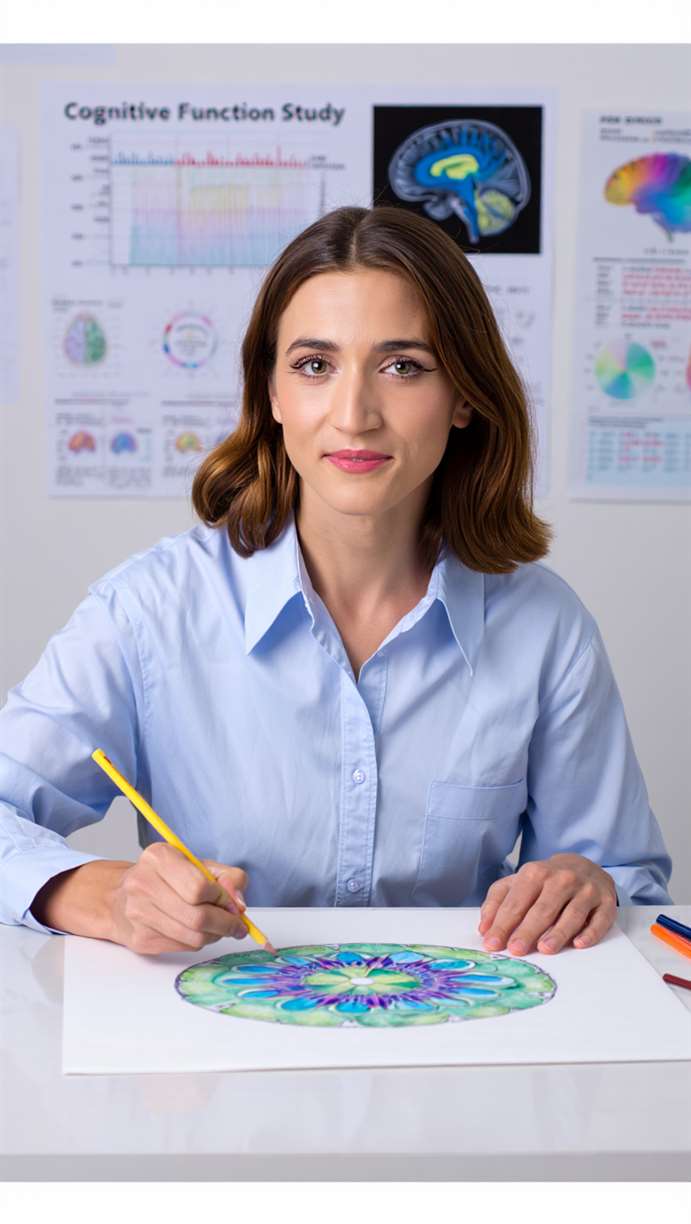
Objective: To conduct a systematic review of existing research on the effectiveness of mandala therapy in reducing anxiety, stress, and improving psychological well-being.
Methods: Systematic search in PubMed, PMC, ResearchGate, and Google Scholar databases using keywords "mandala therapy", "mandala art", "mandala coloring", "art therapy", "anxiety", "stress reduction". Included studies published from 2015 to 2024.
Results: Analysis revealed a significant number of studies demonstrating positive effects of mandala therapy on psychological well-being, anxiety and stress reduction. Meta-analysis shows statistically significant improvements in subjective well-being, anxiety reduction, and depressive symptoms.
Conclusions: Existing research confirms the effectiveness of mandala therapy as an additional therapeutic tool in art therapy. Further randomized controlled trials are needed to clarify mechanisms of action and standardize protocols.
1. Introduction
Mandala therapy, as a branch of art therapy, is attracting increasing attention in the context of psychological health and well-being. Mandalas, traditionally used in various cultural and spiritual practices, have become the subject of scientific research in psychology and psychotherapy in recent decades.
Art therapy is recognized by modern psychology and psychotherapy as an effective method for working with various psychological states (Malchiodi, 2012). Mandala therapy, as part of art therapy, includes creating, coloring, and working with mandalas - symmetrical circular images that can serve as tools for self-expression, reflection, and therapeutic work.
The purpose of this systematic review is to analyze existing scientific research on the effectiveness of mandala therapy in reducing anxiety, stress, and improving psychological well-being. The review focuses on evidence base, excluding esoteric interpretations and concentrating on psychological and therapeutic aspects.
1.1. Research Relevance
In the modern world, there is a growing need for accessible and effective methods of working with stress, anxiety, and psychological discomfort. Mandala therapy represents a relatively simple method to apply, which can be used both independently and as part of comprehensive therapy.
A recent systematic review (2024) showed that mandala art is associated with improved psychological well-being in patients (PMC10801676). This indicates the need for deeper analysis of existing research and their methodology.
2. Methods
2.1. Search Strategy
Systematic literature search was conducted in the following databases:
- PubMed / PMC (National Library of Medicine)
- ResearchGate
- Google Scholar
- Psychological and medical journals
2.2. Inclusion Criteria
- Studies published from 2015 to 2024
- Studies in English or Russian
- Focus on mandala therapy, mandala art, or mandala coloring
- Measurement of psychological indicators (anxiety, stress, well-being)
- Presence of control group or before/after comparison
2.3. Exclusion Criteria
- Studies without empirical data
- Publications with esoteric or metaphysical interpretation without scientific basis
- Non-peer-reviewed sources without methodology
3. Results
3.1. Psychological Well-Being
A 2024 systematic review (PMC10801676) analyzed research on the effects of mandala art on patients' psychological well-being. The review showed that creating and coloring mandalas is associated with improved psychological well-being indicators.
3.2. Anxiety and Stress Reduction
A 2021 study (ResearchGate) demonstrated the effectiveness of mandala coloring as a therapeutic tool in treating stress-anxiety-depression syndrome. Results showed statistically significant reduction in anxiety and stress indicators among participants.
3.3. Mindfulness and Subjective Well-Being
A 2020 study (PMC7581735) compared individual and cooperative mandala creation. Results showed that drawing mandalas increased subjective well-being (SWB) and mindfulness indicators, especially in cooperative work.
3.4. Academic Stress
A 2025 study (ResearchGate) showed that mandala coloring can reduce academic stress levels in students. This indicates potential application of mandala therapy in educational context.
4. Discussion
Analysis of existing research demonstrates a consistent pattern of positive effects of mandala therapy on various aspects of psychological health. Mechanisms of action may be related to several factors:
4.1. Mechanisms of Action
- Attention Concentration: The process of creating a mandala requires focus, which may promote mindfulness state
- Creative Self-Expression: Mandala serves as a tool for non-verbal expression of emotions and states
- Symmetry and Structure: Working with symmetrical forms may have a calming effect
- Process Ritualization: Structured creation process may promote relaxation
4.2. Research Limitations
It is important to note limitations of existing research. Most studies use coloring of pre-drawn mandalas or creating mandalas of traditional form. There are no studies specifically dedicated to different mandala creation techniques and their comparative effectiveness.
Many publications relate to art therapy in a broad sense, without strict protocol standardization. This makes it difficult to compare results of different studies and develop unified recommendations.
4.3. Directions for Future Research
For further development of mandala therapy evidence base, the following are needed:
- Randomized controlled trials with large samples
- Standardization of mandala therapy protocols
- Long-term effectiveness studies
- Comparative studies of different mandala creation techniques
- Studies of mechanisms of action at neurobiological level
5. Conclusion
Systematic review of existing research demonstrates that mandala therapy is associated with improved psychological well-being, reduced anxiety and stress. Existing evidence base, although having limitations, indicates the potential of mandala therapy as an additional therapeutic tool in art therapy.
For further development of the field, stricter methodological approaches, protocol standardization, and expansion of empirical data base are needed. Mandala therapy can take an important place in the arsenal of art therapy methods, provided continued scientific research and evidence base accumulation.