Cooperative and Individual Mandala Creation: Comparative Analysis of Effects on Mindfulness and Subjective Well-Being
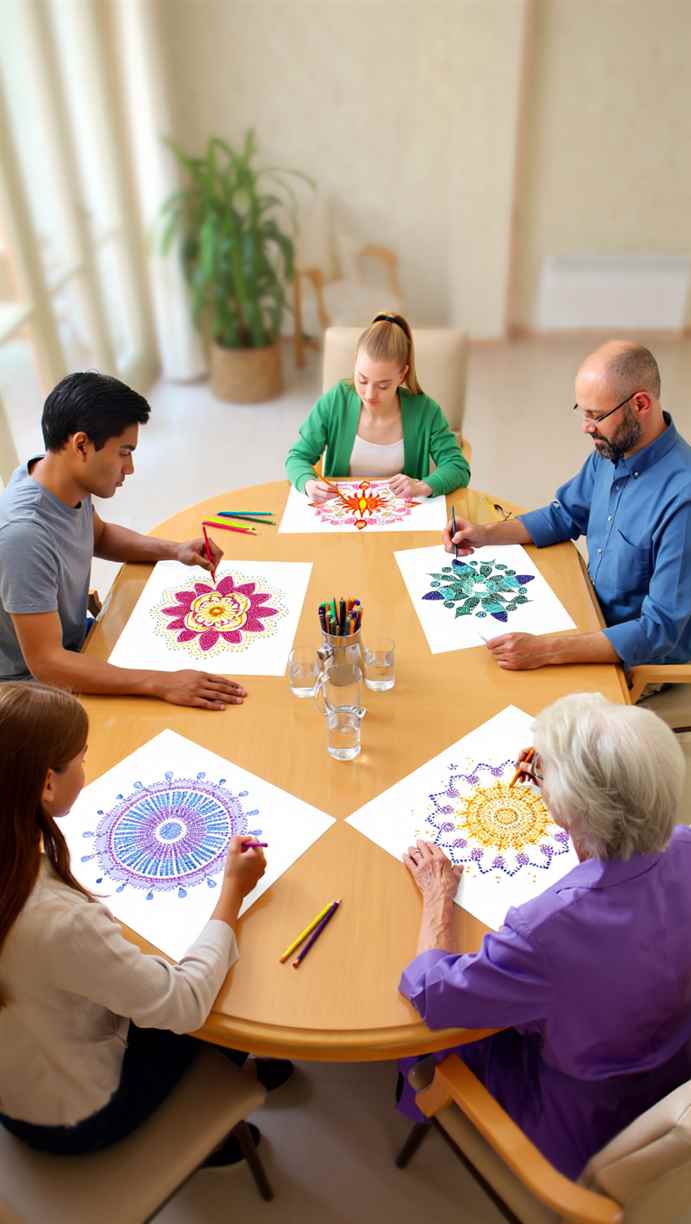
Objective: To compare the effects of individual and cooperative mandala creation on mindfulness, spirituality, and subjective well-being indicators.
Methods: Comparative study with two groups: individual mandala creation and cooperative mandala creation. Measurement of indicators before and after intervention using validated scales.
Results: A 2020 study (PMC7581735) showed that drawing mandalas increased subjective well-being (SWB) and spirituality indicators, especially in cooperative work. Individual work showed more pronounced effects on mindfulness.
Conclusions: Both approaches demonstrate therapeutic effectiveness, but with different emphases. Cooperative work is more effective for increasing subjective well-being and social connectedness, individual work - for developing mindfulness and internal reflection.
1. Introduction
Mandala therapy can be conducted in both individual and group formats. Understanding differences in therapeutic effects of these approaches is important for optimizing mandala therapy application in various contexts.
A 2020 study (PMC7581735) "Cooperative and Individual Mandala Drawing Have Different Effects on Mindfulness, Spirituality, and Subjective Well-Being" provided important data on differences between individual and cooperative mandala creation.
1.1. Theoretical Basis
Individual work with mandalas allows creating deep personal space for reflection and internal work. Cooperative work, on the contrary, includes a social component that can enhance feelings of connectedness and community.
2. Methods
2.1. Study Design
Comparative study with two groups: individual mandala creation and cooperative mandala creation. Participants were randomly assigned to groups.
2.2. Participants
Adult volunteers without serious mental disorders participated in the study. Groups were comparable in age, gender, and baseline indicators.
2.3. Procedure
Individual group: participants created mandalas independently in separate spaces. Cooperative group: participants created mandalas together, interacting with each other.
2.4. Measurements
- Mindfulness (awareness scale)
- Subjective well-being (SWB)
- Spirituality indicators
- Social connectedness (for cooperative group)
3. Results
3.1. Mindfulness
Individual group showed more pronounced improvement in mindfulness indicators. This may be related to the possibility of deeper concentration and internal reflection in individual work.
3.2. Subjective Well-Being
Cooperative group demonstrated more significant improvement in subjective well-being indicators. The social component of cooperative work appears to enhance feelings of well-being.
3.3. Spirituality
Both groups showed improvement in spirituality indicators, but cooperative group - more pronounced. Joint mandala creation may enhance feelings of connection with something greater than individual "self".
3.4. Social Connectedness
Cooperative group showed significant improvement in social connectedness indicators, which was not observed in individual group. This indicates unique therapeutic potential of group work.
4. Discussion
4.1. Mechanisms of Differences
Differences in effects may be explained by different mechanisms:
- Individual Work: Deep concentration, internal reflection, development of self-awareness
- Cooperative Work: Social support, sense of community, shared experience
4.2. Practical Recommendations
Choice between individual and cooperative format should be based on therapy goals:
- Individual format - for developing mindfulness and internal work
- Cooperative format - for increasing well-being and social connectedness
- Combined approach - for comprehensive effect
5. Conclusion
The study demonstrates that both individual and cooperative mandala creation have therapeutic value, but with different emphases. Understanding these differences allows optimizing mandala therapy application depending on therapeutic goals.