Mandala Therapy in the Context of Art Therapy: Theoretical Foundations and Practical Application
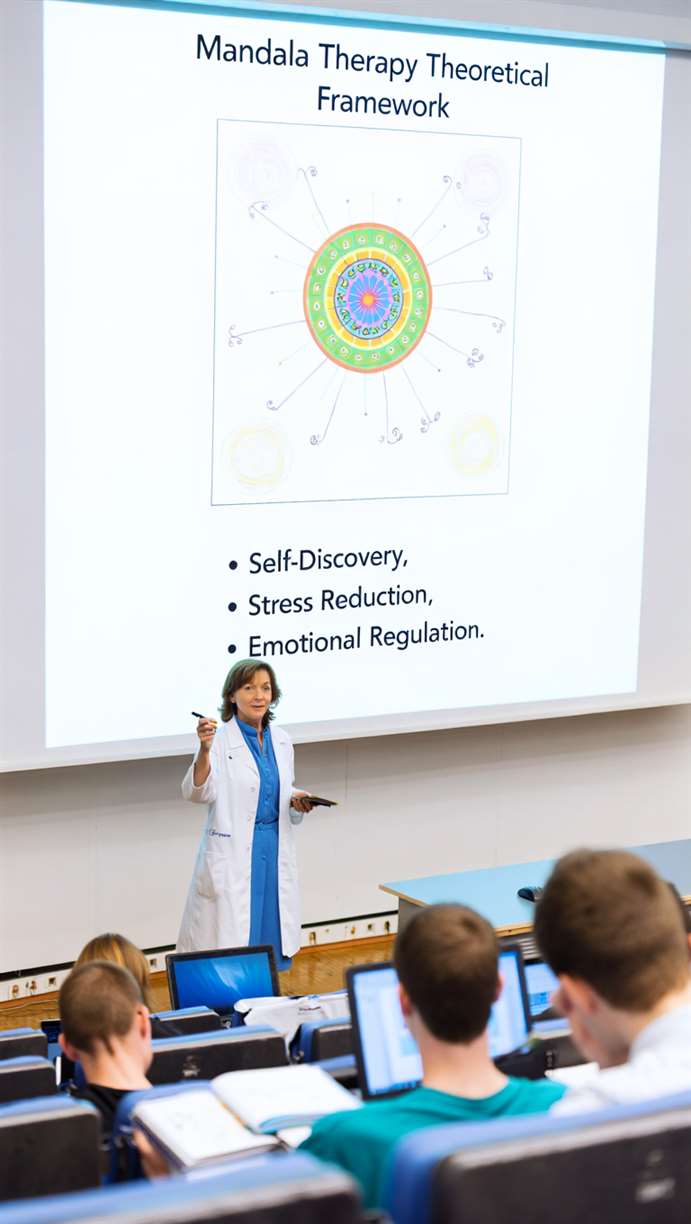
Objective: To present a theoretical review of mandala therapy in the context of modern art therapy, examine theoretical foundations and methodology of practical application.
Methods: Theoretical analysis of literature on art therapy, psychology of creativity, and mandala therapy. Systematization of theoretical approaches and practical methods.
Results: Mandala therapy represents an integrative approach combining elements of art therapy, psychology of creativity, and symbolic work. Theoretical foundations of mandala therapy are based on modern concepts of art therapy and psychotherapy.
Conclusions: Mandala therapy can be integrated into psychotherapeutic practice as an independent method or as part of a comprehensive approach. Understanding theoretical foundations is important for effective application of the method.
1. Introduction
Mandala therapy as a branch of art therapy has deep theoretical roots and practical application. Understanding theoretical foundations of mandala therapy is important for effective use of the method in psychotherapeutic practice.
Art therapy is recognized by modern psychology and psychotherapy as an effective method for working with various psychological states. Mandala therapy, as part of art therapy, is based on theoretical foundations of art therapy and develops them in a specific direction.
1.1. Theoretical Roots of Art Therapy
Art therapy as a branch of psychotherapy developed on the basis of various theoretical approaches: psychoanalysis, humanistic psychology, cognitive-behavioral therapy. Modern art therapy integrates elements of various approaches.
2. Theoretical Foundations of Mandala Therapy
2.1. Psychology of Creativity
Mandala therapy is based on understanding the creative process as a therapeutic tool. Creating a mandala activates creative resources of the personality and promotes self-expression and reflection.
2.2. Symbolic Work
Mandala as a symmetrical circular form has symbolic meaning. Working with a mandala includes symbolic work that can contribute to integration of various aspects of personality.
2.3. Process-Oriented Approach
Mandala therapy focuses not only on the result, but also on the process of creation. The process of creating a mandala itself is therapeutic, promoting concentration, relaxation, and internal work.
2.4. Integrative Approach
Mandala therapy integrates elements of various therapeutic approaches: art therapy, symbol drama, gestalt therapy, cognitive-behavioral therapy. This allows using the method in various contexts.
3. Methodology of Practical Application
3.1. Process of Creating a Mandala
The process of creating a mandala includes several stages: preparation, creation, reflection. Each stage has therapeutic significance and can be used for working with various aspects of personality.
3.2. Working with Completed Mandala
Working with a created mandala includes analysis, interpretation, and integration of experience. The therapist helps the client to understand the meaning of the created mandala and integrate the experience into daily life.
3.3. Individual and Group Work
Mandala therapy can be applied both in individual and group work. Each format has its advantages and can be chosen depending on therapy goals.
4. Integration into Psychotherapeutic Practice
4.1. As an Independent Method
Mandala therapy can be applied as an independent method for working with various psychological states: stress, anxiety, depression, trauma.
4.2. As Part of Comprehensive Approach
Mandala therapy can be integrated into a comprehensive therapeutic approach, complementing other methods: psychotherapy, pharmacotherapy, other forms of art therapy.
4.3. Professional Requirements
Application of mandala therapy requires appropriate training and qualifications. The therapist must understand theoretical foundations of the method and have practical skills in working with mandalas.
5. Discussion
5.1. Strengths of the Method
Mandala therapy has a number of advantages:
- Accessibility and simplicity of application
- Flexibility in application
- Integration of various therapeutic approaches
- Working with various aspects of personality
5.2. Limitations and Challenges
Application of mandala therapy faces certain challenges:
- Need for protocol standardization
- Requirements for specialist qualifications
- Limited evidence base
- Need for further research
5.3. Directions for Future Research
For further development of mandala therapy, the following are needed:
- Development of standardized protocols
- Effectiveness studies in various contexts
- Study of mechanisms of action
- Comparison with other art therapy methods
6. Conclusion
Mandala therapy represents an integrative approach combining theoretical foundations of art therapy and practical methods. Understanding theoretical foundations is important for effective application of the method in psychotherapeutic practice.
For further development of the field, additional research, development of standardized protocols, and expansion of evidence base are needed. Mandala therapy can take an important place in the arsenal of art therapy methods.